Introduction
Welcome to the Omnium Tech Docs! This is your primary reference for how to integrate with, operate, and extend Omnium, including APIs, data models, patterns, and best practices.
Omnium is a cloud-based Order Management System (OMS) and E-commerce platform for unified commerce operations. The documentation is developer-first, with examples, recommended flows, and clear guidance on what to do (and what to avoid).
Who these docs are for
- Developers
- Technical architects
- Support & operations
- Partner consultants
- New team members
- Anyone who asked a question we answered with “it’s in the tech docs”
Need help using the Omnium UI? Check out the User Guides at help.omnium.no for step-by-step instructions on using Omnium's interface.
If you are looking for product marketing, commercial material, or case studies, please visit omnium-oms.com or contact us. That content isn't here.
Ready to build?
- Read Getting Started
- Set up access and authentication
- Browse API endpoints for your use case
- Ensure you use the right environment
- E-com? Check out the e-commerce quick start guide
- Explore Data In and Data Out best practices
- Check Release Notes for the latest updates
- Contact support for issues not covered in docs. We continuously improve the documentation, so your input is appreciated.
What is an OMS?
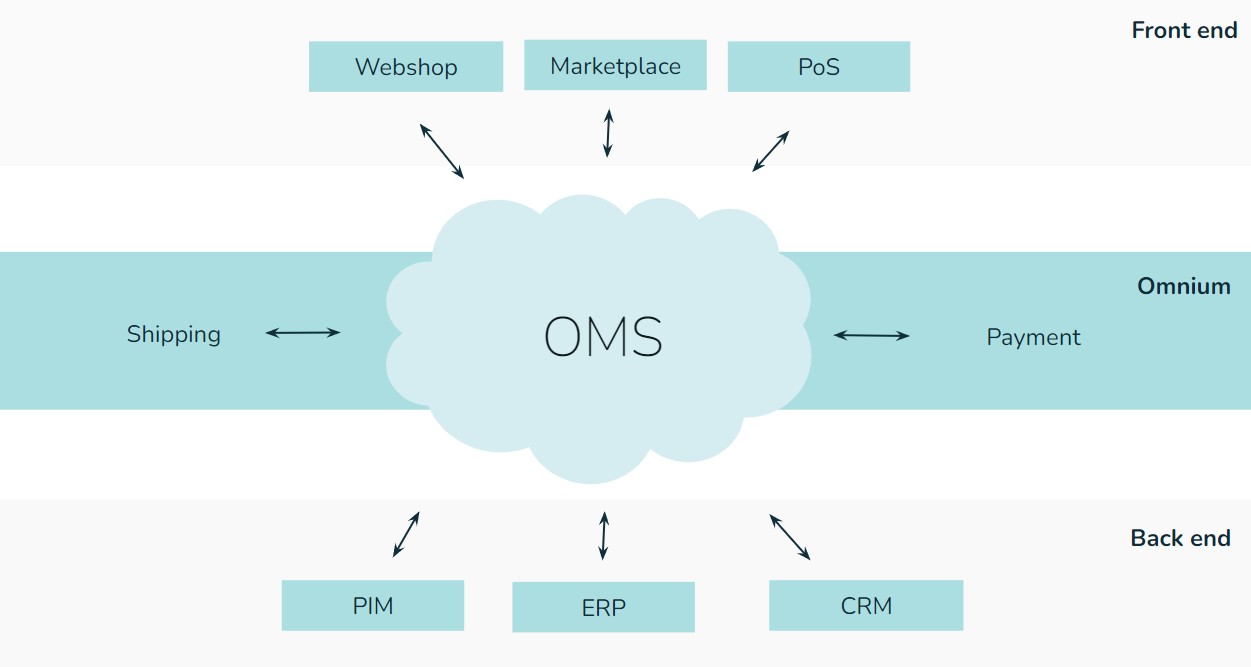
An Order Management System (OMS) is a software solution that simplifies and manages the order fulfillment process. It acts as a central hub, consolidating and organizing orders from various sales channels, including online stores, in-person transactions, and phone orders. By coordinating across all touchpoints, OMS systems enable businesses to deliver a seamless, omnichannel customer experience.
Traditional OMS challenges
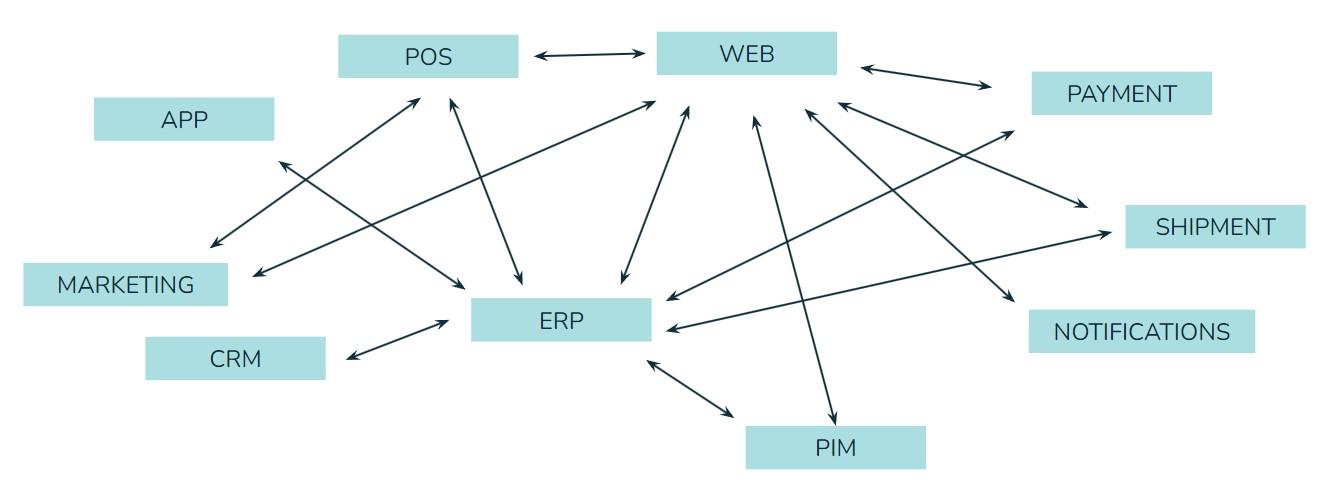
In traditional retail setups, managing orders involves numerous integration points that connect different sales channels to back-office systems. These connections can be complex, requiring significant time, effort, and financial investment. As a result, inefficiencies and higher operational costs often arise.

The Omnium advantage: Cloud-Based OMS
Omnium transforms traditional order management with a modern, cloud-based OMS. Designed to integrate effortlessly with other cloud services and third-party applications, Omnium uses pre-built connectors or APIs to reduce setup time and effort. It connects essential business systems like inventory management, CRM, e-commerce platforms, and shipping providers, simplifying your operations.
Key benefits of Omnium OMS
Omnium's cloud-based OMS offers several advantages over traditional systems:
-
Greater flexibility & scalability
Easily expand or contract resources based on business needs, ensuring you can handle fluctuating order volumes and growth. -
Enhanced accessibility
Access Omnium from anywhere with an internet connection, supporting remote teams and multiple locations. -
Cost-effective
Omnium operates on a subscription or pay-as-you-go model, eliminating the need for significant upfront investments in hardware and infrastructure. -
Reduced in-house IT burden
Cloud providers manage maintenance, updates, and security, reducing the workload on your in-house IT teams.
Why choose Omnium?
Omnium is the ideal solution for businesses seeking a seamless, efficient order management system. Here's why:
Omnichannel excellence
With the omnichannel approach, our system ensures a cohesive and integrated customer experience across various sales channels. Whether it's online, in-store, or through other touchpoints, our solution seamlessly connects the dots to provide a unified and consistent journey for your customers.
Simplified offer creation
Omnium simplifies the process of crafting compelling offers. The user-friendly interface allows businesses to quickly design and customize promotions, eliminating complexity.
Efficient order management
From order placement to fulfillment, Omnium streamlines the entire process. Its intuitive tools and user-centric design empower your team to focus on delivering exceptional service.
Minimized integration points
Omnium reduces the complexity of system integration by minimizing the number of connection points. This not only lowers implementation costs but also decreases ongoing maintenance demands.
Real-time synchronization
Omnium ensures real-time synchronization of offers and shopping carts, maintaining consistency across all touchpoints and improving the customer shopping experience.
Dedicated sales & customer service portal
Omnium provides a centralized portal for sales and customer service teams. This hub streamlines communication and collaboration, ensuring that your teams deliver exceptional service across all customer interactions.
Key features & modules
Omnium includes a wide range of functionalities designed to support omnichannel sales and operational efficiency:
- BOPIS (Buy Online, Pick Up In Store)
- Order Management (status updates, returns, shipping, subscriptions)
- E-Receipts (from all sales channels)
- Inventory Management (per store/warehouse)
- Integrations (e-commerce, POS, ERP, CRM, PIM, payment systems)
- Cart Management (create carts in POS or OMS, visible on the website)
- CRM (B2C, B2B)
- Notifications (email/SMS)
- GDPR Compliance (data export, deletion, anonymization)
- Project Management
- Headless E-Commerce