

Hello,
Welcome to the Omnium technical documentation.
Omnium is a cloud-based Order Management System (OMS) and E-commerce platform that gives the order one home: every channel writes to it, every channel reads from it. These docs are your primary reference for integrating with, operating, and extending Omnium. Here you'll find the REST APIs, data models, integration patterns, and best practices you need to push data in, get data out, and understand what a workflow did to your order, and why.
Ready to build?
Get started
Read Getting Started to understand the API fundamentals, then set up access and authentication.
Explore the API
Browse API endpoints for your use case and ensure you use the right environment.
Follow a guide
E-com? Check the e-commerce tutorial. Otherwise, explore Data In and Data Out best practices.
Stay up to date
Check Release Notes for the latest updates. Contact support for issues not covered — we continuously improve the docs.
Quick Guides
Pick the guide that matches your integration role.
Explore by Domain
Popular Pages
What is an OMS?
An Order Management System (OMS) is a software solution that simplifies and manages the order fulfillment process. It acts as a central hub, consolidating and organizing orders from various sales channels, including online stores, in-person transactions, and phone orders. By coordinating across all touchpoints, OMS systems enable businesses to deliver a seamless, omnichannel customer experience.
Traditional OMS vs. Omnium
In traditional retail setups, managing orders involves numerous integration points that connect different sales channels to back-office systems. These connections can be complex, requiring significant time, effort, and financial investment.
Omnium transforms this with a modern, cloud-based OMS. Designed to integrate effortlessly with cloud services and third-party applications, Omnium uses pre-built connectors or APIs to reduce setup time and effort.
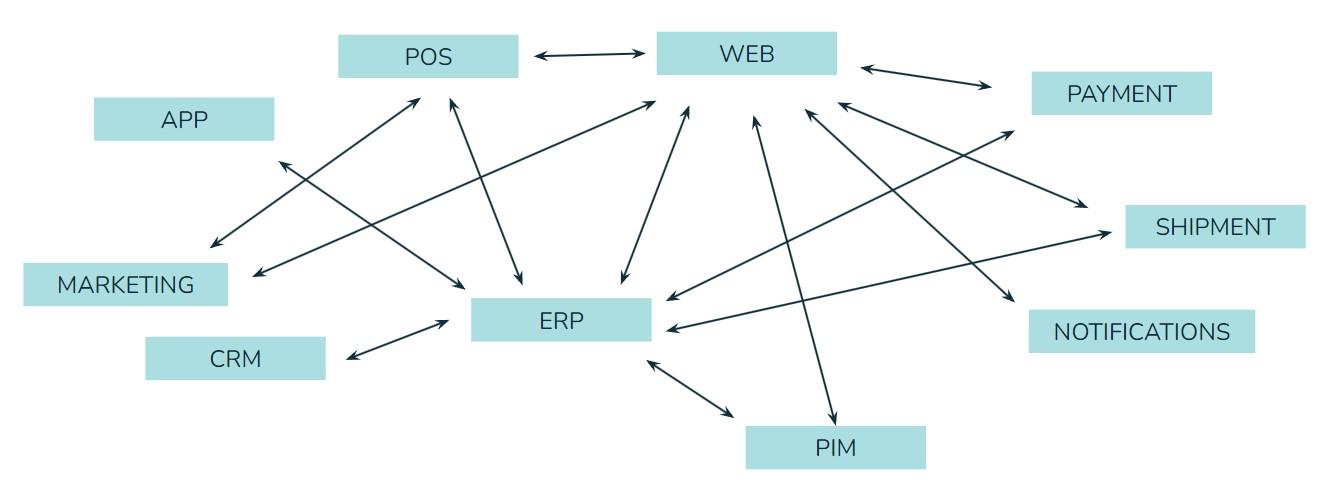
Many integration points, high complexity, significant investment
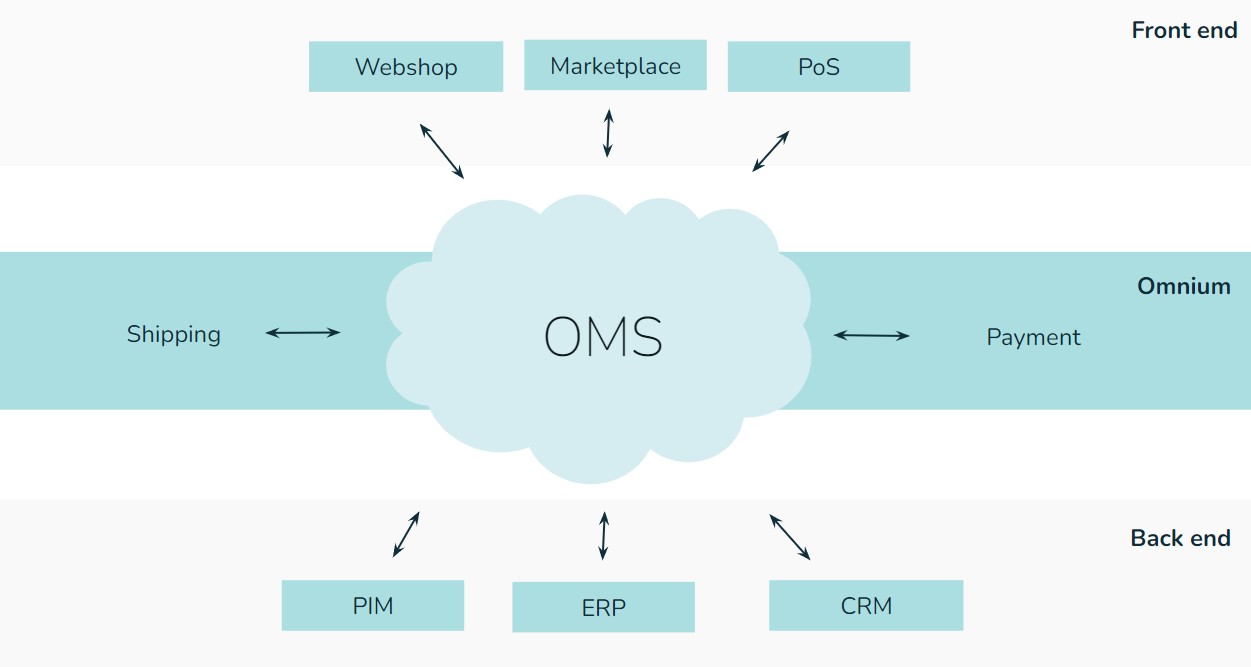
Pre-built connectors, cloud-native, reduced complexity